


Products
Equipment Products
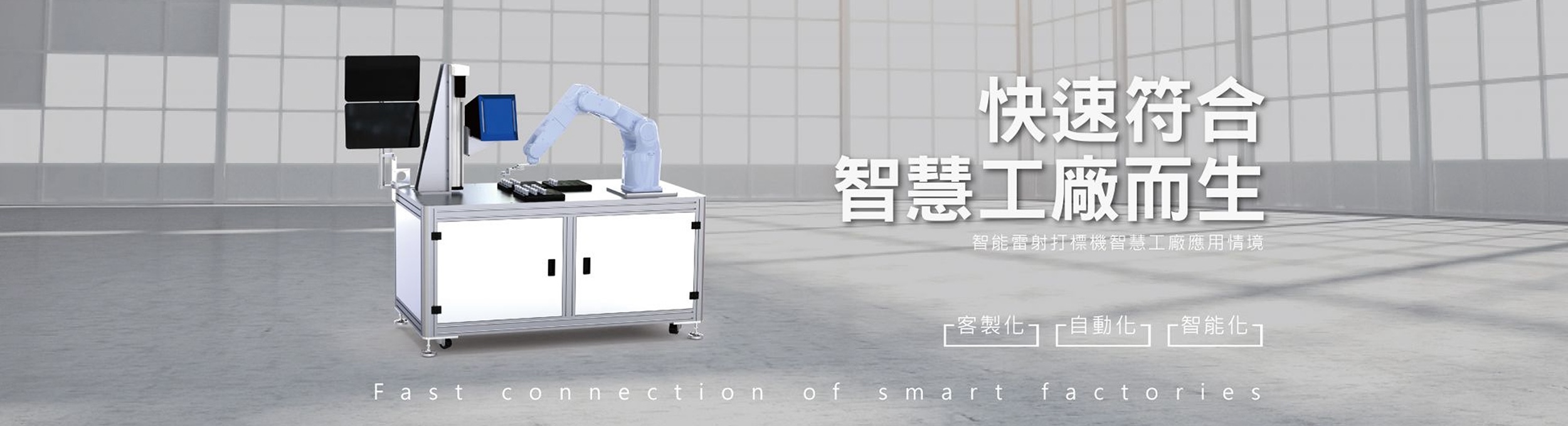
Smart Factory

Robotic Arm

Key Features of Jumbo Laser
Jumbo Laser integrates controllers, robots, laser systems, and cloud resources from the Syntec Group to deliver rapid deployment solutions ranging from standalone machines to complete production lines and turnkey factories. We help customers build highly flexible, low-carbon smart manufacturing models.
Global manufacturing with localized deployment for cost-effective smart manufacturing.

Robotic Arm

Integrated Software and Hardware Driving the Future of Manufacturing

With strengths in high customization, cross-brand connectivity, and seamless software-hardware integration, Jumbo Laser also provides an intuitive graphical user interface (GUI), enabling factories to significantly lower the barriers to automation adoption.


High Openness

A highly open platform that allows users to develop their own applications, adding value to in-house automation.


Industry Process Packages

A wide range of industry-specific process packages enables rapid adaptation to diverse machining and processing scenarios.


High Speed and High Precision

High-speed, high-precision performance with excellent repeatability to meet demanding precision machining requirements.


High Level of Integration

Seamless integration with various types of equipment to improve production efficiency, reduce labor costs, and achieve a short return on investment.

Robotic Arm Models

Based on different industries and applications, we provide the most suitable robotic arms to comprehensively meet automation needs. Below is a reference list of Leantec robotic arm models.


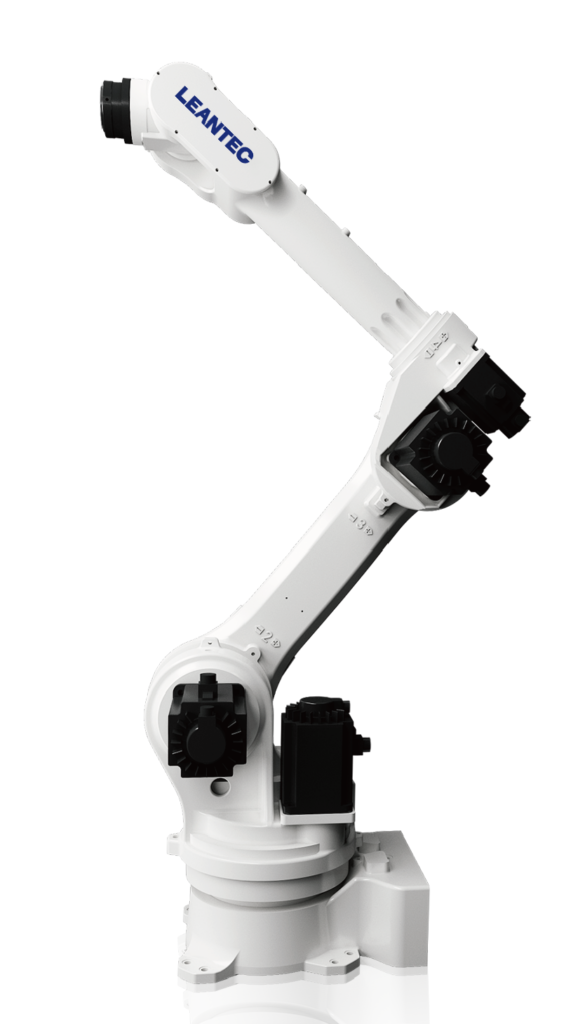
R Series


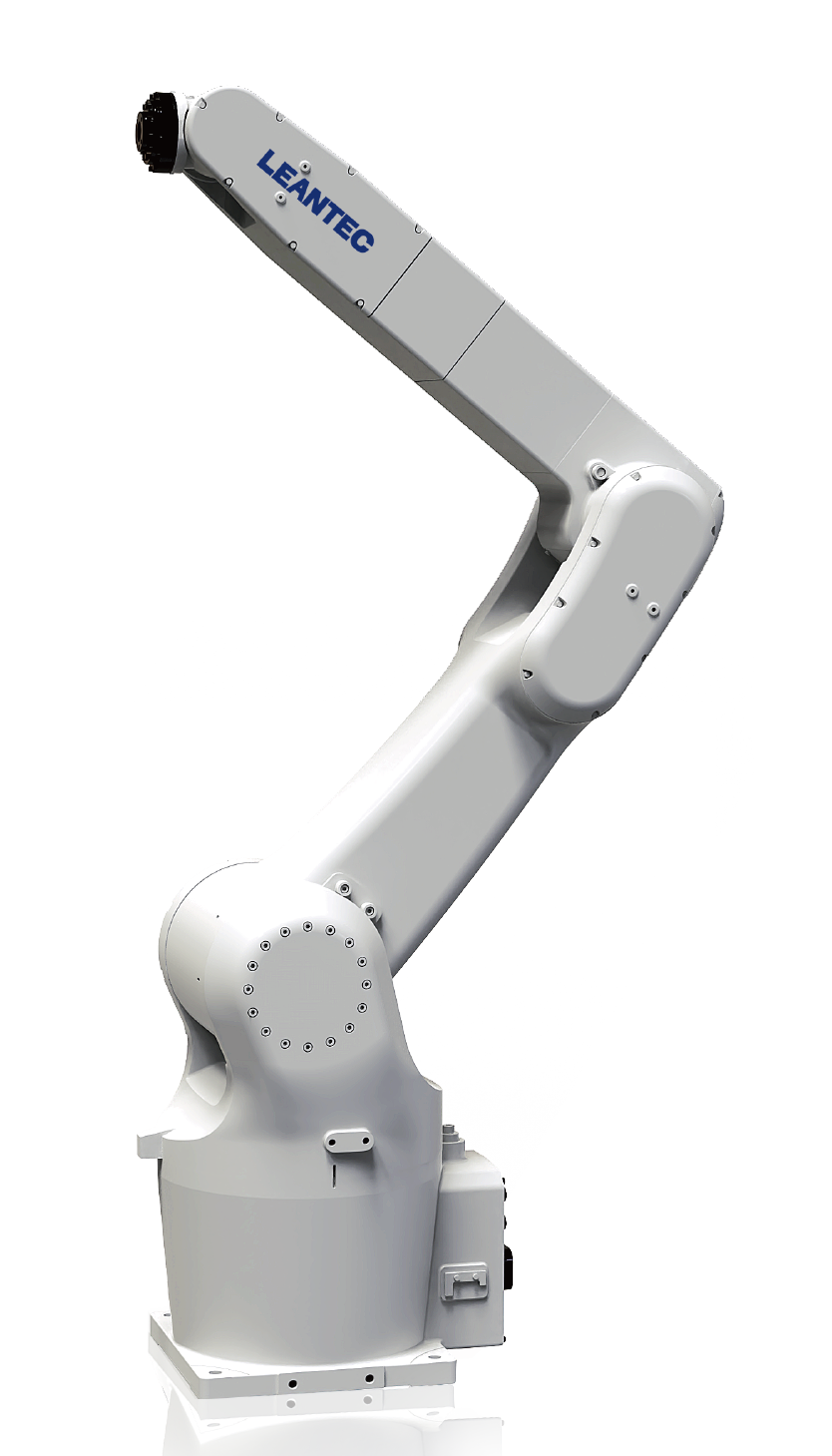
Standard 6-Axis Robots

Featuring a high protection rating to operate reliably in harsh environments and high repeatability for precision machining. The compact body design saves space while enhancing flexibility. Hollow-wrist models effectively eliminate cable entanglement issues. These robots deliver outstanding performance in pick-and-place, grinding, and assembly applications.


C Series


Industry-Specific 6-Axis Robots

High-payload models designed specifically for pick-and-place and welding applications. With excellent cost-performance, they significantly lower the entry barrier to production line automation. When combined with Syntec control systems, they support multiple industry-oriented process packages, making smart factory implementation simpler and faster.


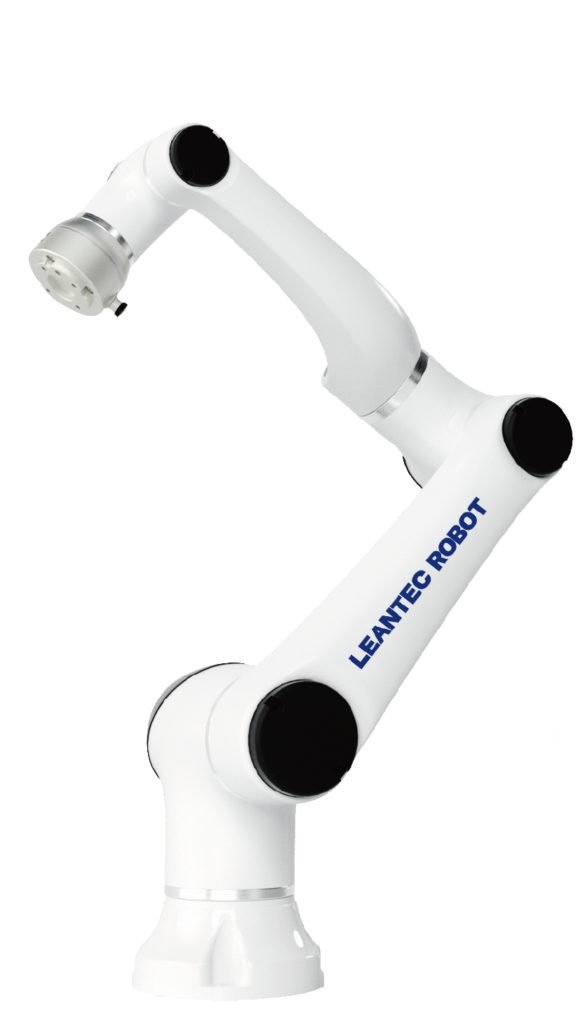
H Series


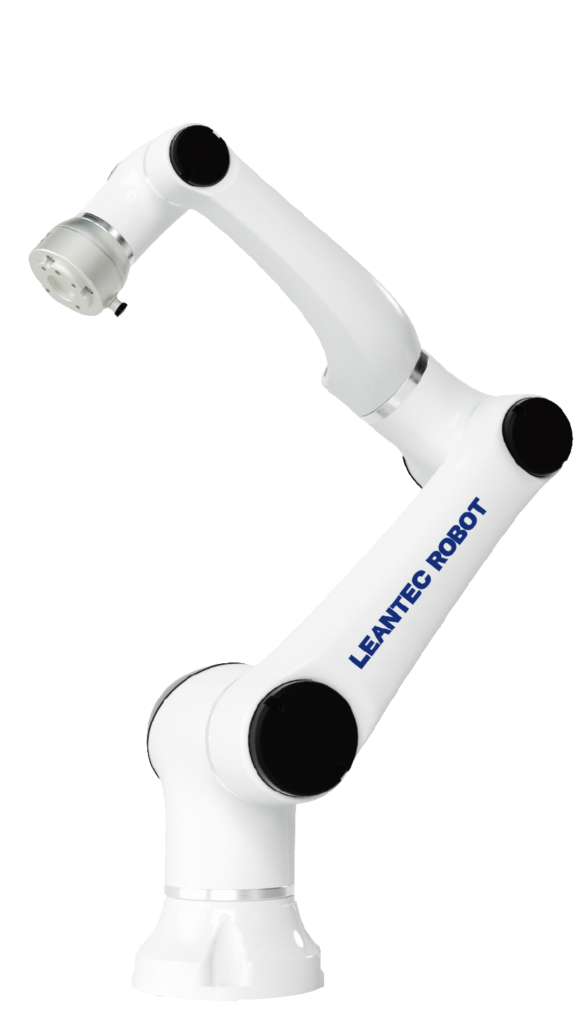
Collaborative 6-Axis Robots

High-protection collaborative robots with a lightweight structure that is easier to install than traditional industrial arms, freeing up more deployment space while ensuring operational safety. The hand-guiding (drag-and-teach) function enables extensive human-robot collaboration scenarios. When paired with Leantec mobile carts, manufacturing operations become even more flexible.


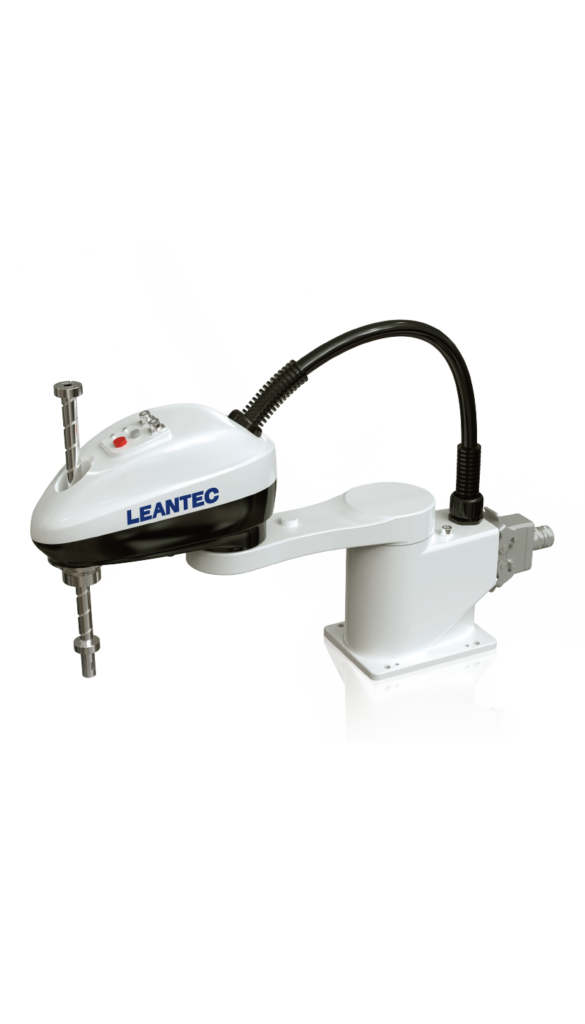
Y Series


SCARA4-Axis Robots

SCARA Offering advantages such as low cost and high precision, these robots are also available in IP54 high-protection versions suitable for high-contamination environments. Leantec SCARA robots provide industry-leading precision within their class and excel in pick-and-place and assembly applications in the 3C electronics industry.


A demo machine is available on-site. For inquiries, please contact Chengbo Laser.
Schedule a Machine Viewing
Success Stories
Jumbo Laser Success Cases 

Jumbo Laser Success Cases

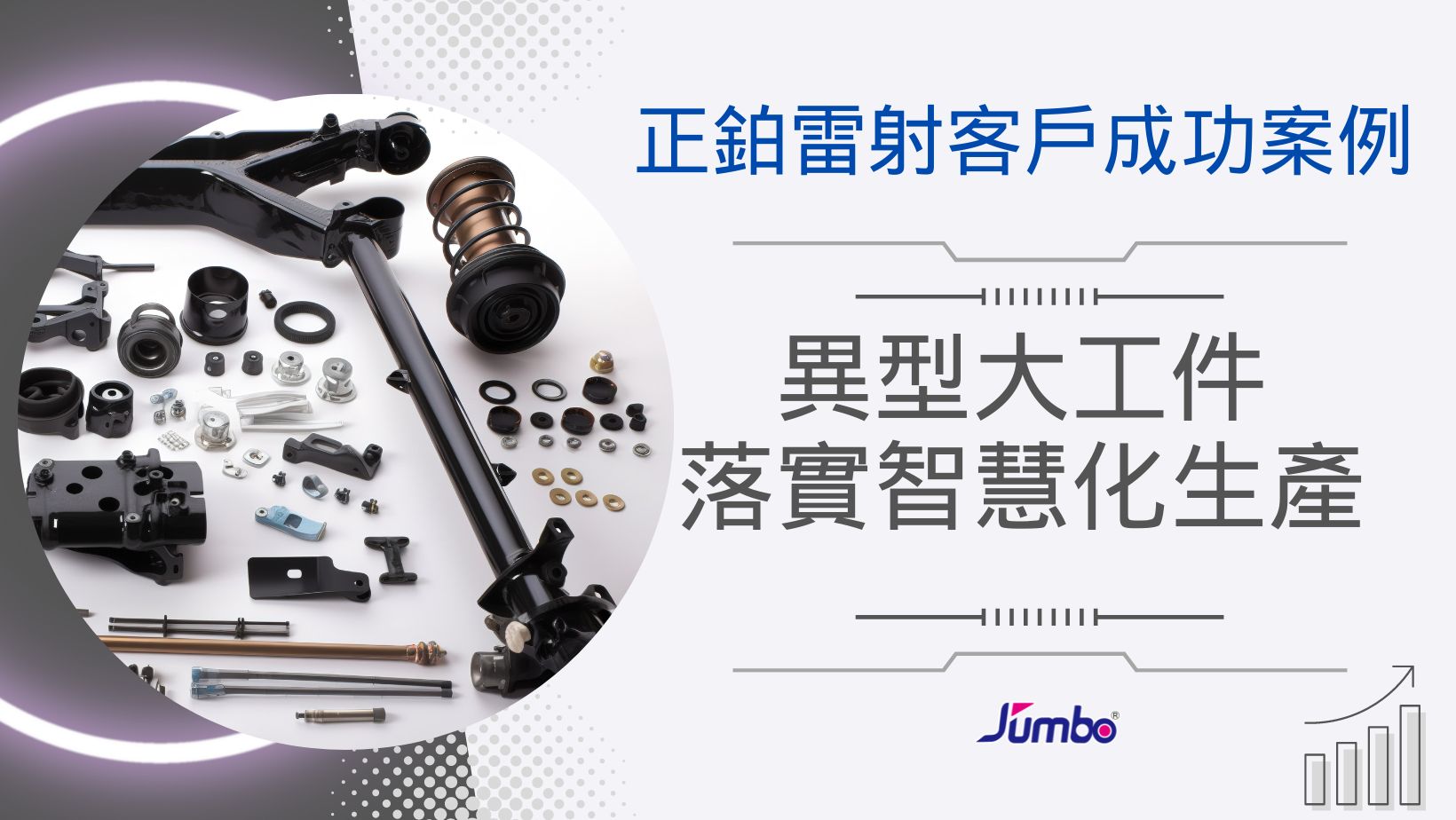
Laser Marking Toward Smart Manufacturing
Through a 3D vision–enabled intelligent automated laser marking workstation, Jumbo Laser addresses the pain points of traditional laser marking for large, irregular-shaped workpieces, opening a new chapter in smart production. This solution improves production efficiency, reduces operating costs, and aligns with environmentally friendly, low-carbon manufacturing trends. As laser technology becomes increasingly vital in modern manufacturing, Jumbo Laser will continue to deepen its expertise in laser technologies, supporting enterprises in achieving smart manufacturing and advancing toward an efficient, eco-friendly, and sustainable future.
Low-Cost Automation Entry, Creating Double the Value

Keeping Pace with Manufacturing Trends

A well-known Taiwanese fluid component manufacturer recently successfully implemented an intelligent laser marking system, combined with a dual-layer mobile robot, to achieve automated production and generate significant economic benefits. To meet requirements for traceability barcodes on critical components, the manufacturer must comply with international marking standards, requiring barcode grading verification at Grade B or above. Previously, laser marking machines and barcode quality inspection stations were installed at the post-production stage to ensure product quality.

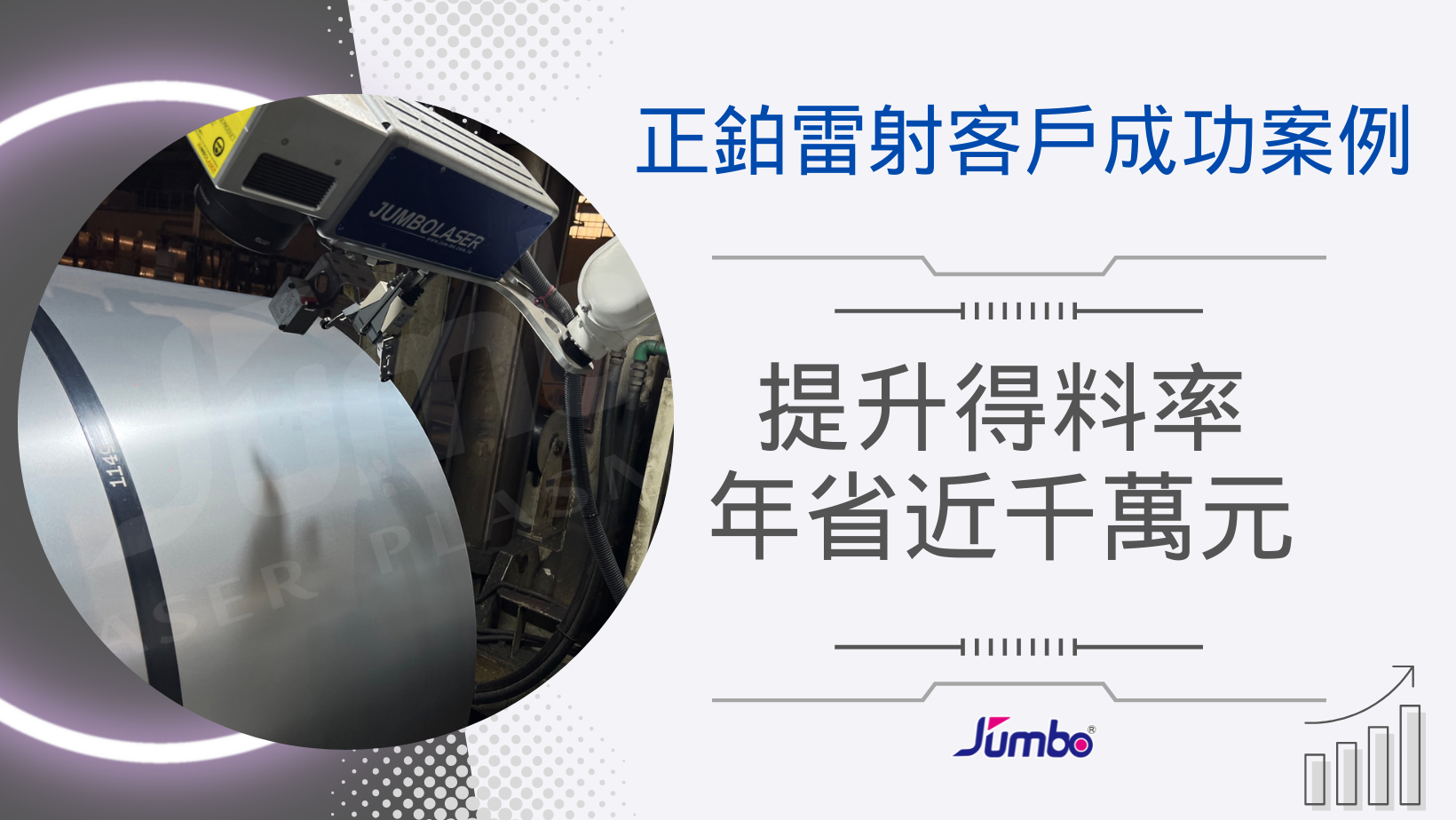
Improving Yield Rate and Saving Nearly Tens of Millions Annually

A leading Taiwanese steel manufacturer, with an annual production capacity of 16 million tons, is actively pursuing zero-carbon processes amid the global ESG movement. The initiative began with optimizing the production marking of steel coils, an essential identification step for every coil.

FAQ
Q&A
Q
Will there be smoke or odor during the laser marking process? How is it handled?
A
Some materials may generate a small amount of smoke or odor during laser marking, especially when using a CO₂ laser on materials such as wood or leather. We recommend customers use a dedicated laser fume extractor, which efficiently filters smoke and odors, keeping the workspace clean and maintaining air quality to ensure the health of operators.
A
The price of a laser marking machine varies depending on the laser type, power, configuration, and functions (such as whether it includes an automation system or vision positioning). Prices typically range from several hundred thousand to over one million NTD. Standard configurations usually include the main unit, control software, computer (optional), fixtures (optional), installation, and training. We will provide a detailed quotation based on your specific requirements.
A
The primary difference between laser welding and traditional welding lies in the heat source and energy density. Laser welding offers high energy density, low heat input, fast welding speed, minimal thermal deformation, narrow and deep weld seams, no need for filler material (in certain cases), and the ability to weld difficult-to-weld materials. Traditional welding, on the other hand, often results in a larger heat-affected zone, more noticeable deformation, and slower speed.
A
The choice of laser welding machine power depends on the type of material, thickness, required welding depth, and welding speed. Generally, higher power allows for processing thicker materials, achieving deeper welds, and welding at faster speeds. Common power ranges from several hundred watts to several kilowatts.Jumbo provides testing services and can recommend the most suitable power level based on your specific needs.
A
Our equipment is designed with user-friendliness in mind, featuring an intuitive and simple interface. We provide detailed operation manuals and on-site training, enabling general technicians to operate the machine after instruction. Jumbo also offers fixture design and automation design services to reduce labor requirements.
A

To help you make the best choice, we need to understand your welding requirements in detail, including:

  1. Type and thickness of materials

  2. Desired welding depth and width

  3. Daily or monthly production capacity requirements

  4. Existing production line setup

  5. Specific requirements for welding quality, precision, and efficiency

  6. Budget range

Based on this information, Jumbo professional team will recommend the most suitable equipment and configuration for you.